
See the route and destination together
Review doors, aisles, turning areas, nearby equipment, overhead conditions and the proposed destination in one shared facility view.
EQUIPMENT MOVES · PLANT LAYOUT · REORGANIZATION
Axial Spaces captures existing facility conditions with mobile SLAM LiDAR and builds shared 3D context for CNC machine moves, installations, access planning and plant reorganization. Your team can compare the route, destination and working envelope before rigging, detailed design or shutdown activity begins.
FACILITY CONTEXT · BEFORE THE MOVE
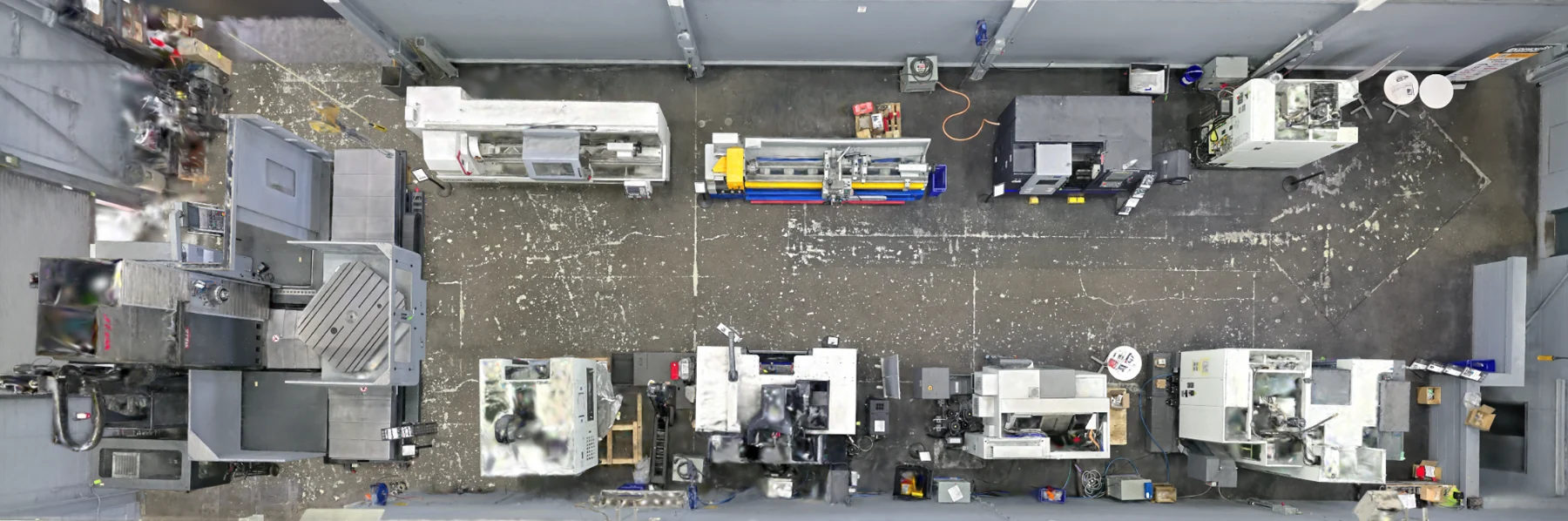
Real capture gives operations, maintenance, rigging and management a common view of the destination, surrounding production and access conditions before commitments harden.
Photoreal layout view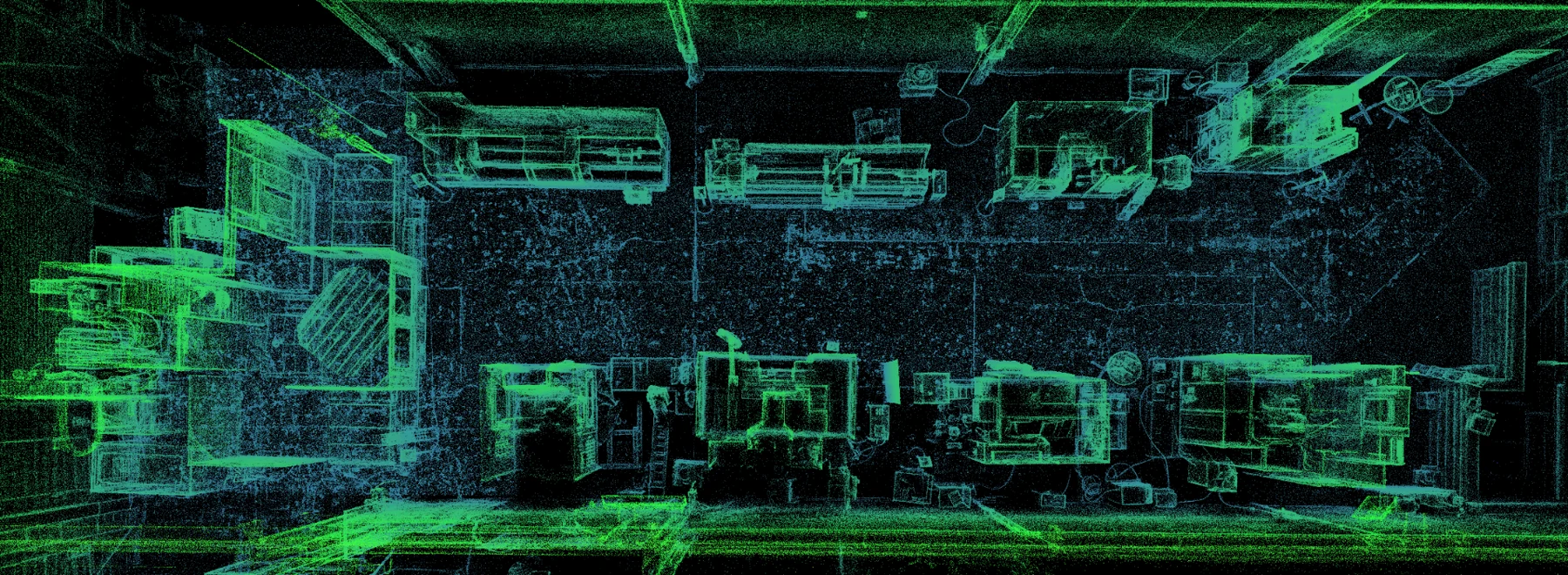 Spatial layout view
WHAT YOUR TEAM GAINS
Review doors, aisles, turning areas, nearby equipment, overhead conditions and the proposed destination in one shared facility view.
Place project geometry where scoped and discuss alternatives around production flow, service access, clearances and future expansion.
Bring operations, maintenance, rigging, contractors, engineering and management into the same visual conversation before site work begins.
Drawings are often incomplete, outdated or separated from the clutter and operating reality of the plant. LiDAR capture records the visible facility as it exists now, while a photoreal 3D twin helps people recognize the space quickly.
That shared baseline can expose questions early: route width, turning clearance, overhead restrictions, temporary obstructions, service zones, nearby production and where additional verification is required.
Moving one machine can change material flow, operator movement, forklift routes, maintenance access, utilities, safety zones and the next expansion decision. A top-down or navigable facility view helps the team examine those interactions rather than treating the move as an isolated footprint.
Where project models are available and suitable, virtual equipment context can be aligned to the captured plant for option review. Final foundations, services, structural requirements and installation details remain subject to proper engineering and field verification.
A CNC installation is more than the nominal machine footprint. Review the exact configuration, control cabinet, chip conveyor, coolant system, transformer, bar feeder, pallet equipment, guarding, doors, service panels and maintenance-removal paths that apply to the purchased machine.
The facility twin helps the team compare that working envelope with columns, aisles, nearby production, utilities, operator flow and the proposed rigging route. Critical clearances and machine-builder requirements still require controlled field verification.
Spatial context is especially valuable during feasibility and coordination, when the team needs to eliminate weak options and identify the right questions before commissioning detailed work.
It can also improve contractor briefings by showing the destination and surrounding conditions before a quotation, site walk or shutdown plan is finalized.
Derek Rozon's background spans machining, programming, tooling, workholding, production leadership and machine-tool applications. That experience helps the capture focus on how the equipment will actually be accessed, serviced and used—not only where a model fits on a floor plan.
Axial Spaces supports the decision process; it does not replace the rigger, machine builder, electrician, millwright, structural engineer or other qualified professional responsible for execution.
HOW A PROJECT MOVES
Record the destination, route, surrounding equipment and plant context with a planned mobile SLAM LiDAR route.
Compare machine information, route assumptions, destination options, workflow and known constraints against the captured facility.
Prepare agreed browser views, planning-grade reference measurements and virtual equipment context where scoped.
Bring operations, maintenance, the machine supplier, rigger, trades and management into the same facility conversation.
Proceed only after critical dimensions, execution methods, utilities, foundations, guarding and compliance have been verified by the responsible parties.
STRAIGHT ANSWERS
Yes, where a suitable CAD or 3D model is available and virtual placement is included in scope. Model units, origin, orientation and alignment must be controlled. The result supports review; final installation still requires field and engineering verification.
It can provide strong planning context, expose obvious conflicts and direct controlled checks to the clearances that matter. The scan cannot confirm fit on its own. The exact machine configuration, critical route and destination dimensions, machine-builder requirements and execution constraints must be independently verified.
It can help stakeholders review the intended route, doors, aisles, turning space, overhead conditions and surrounding equipment. The qualified rigger remains responsible for the move plan, loads, methods and execution.
Yes. The captured facility can provide a common reference for comparing proposed positions, access, production flow and expansion concepts when option development is included in the project scope.
Early enough that the captured conditions can influence feasibility, quotations and option selection—before key assumptions harden into detailed design, purchase commitments or shutdown plans.
START WITH ONE REAL FACILITY
Focused decision-capture projects start around CAD $1,500. Full-facility capture, facility twins, equipment-move planning, hosting, and specialized deliverables are quoted by scope.
Scope My Facility Project