
Challenge the nominal footprint
Include controls, conveyors, transformers, coolant equipment, automation, guarding, doors, service zones and maintenance-removal paths—not only the machine casting.
NEW CNC · MACHINE FIT CHECK · INSTALLATION PLANNING
Before a CNC lathe, machining centre, grinder, EDM, inspection machine, robot cell or automation system reaches the plant, Axial Spaces captures the existing facility with mobile SLAM LiDAR. The planning-grade spatial record helps the project team evaluate placement, access and installation context before purchase and move-day assumptions harden.
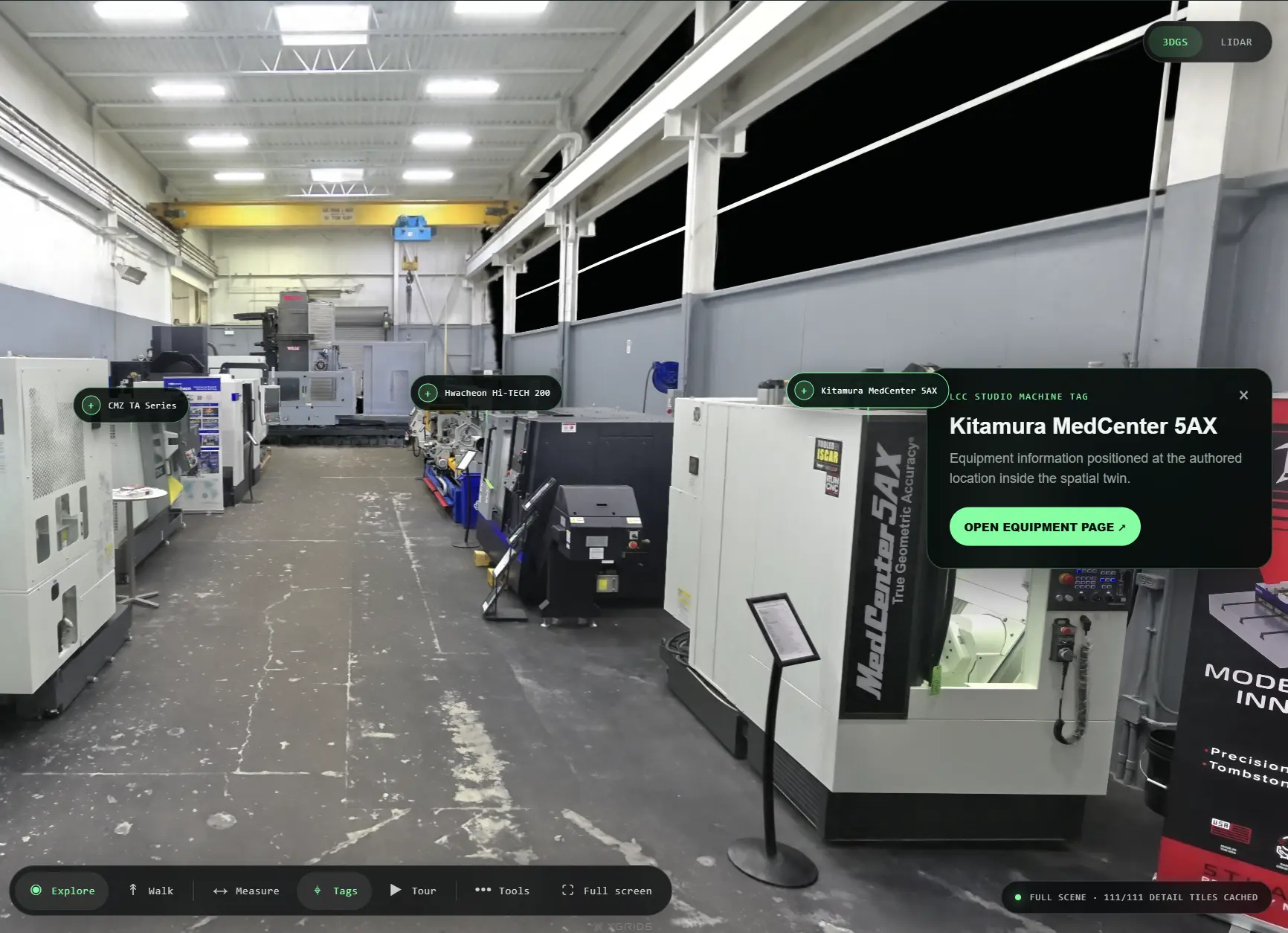
MACHINE FIT CHECK · SHARED FACILITY CONTEXT
Provide the machine make, model, layout drawing, dimensions and STEP model when available. Axial Spaces uses that information with captured facility context to test the questions that should be answered before arrival.
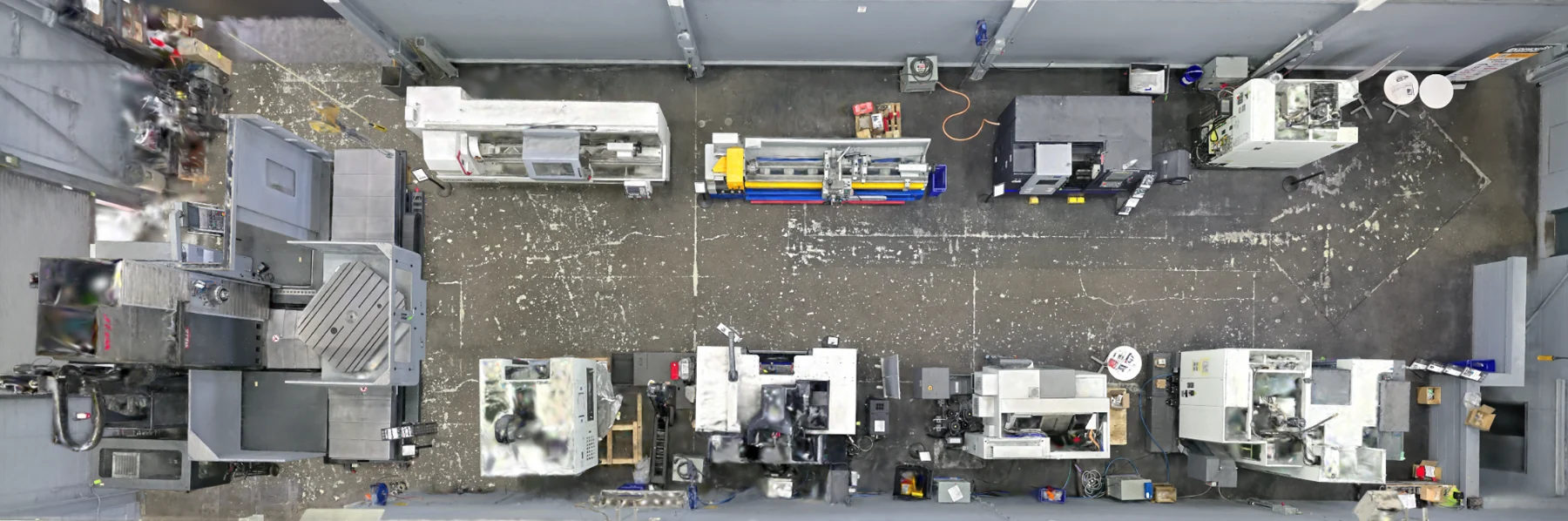 Destination context
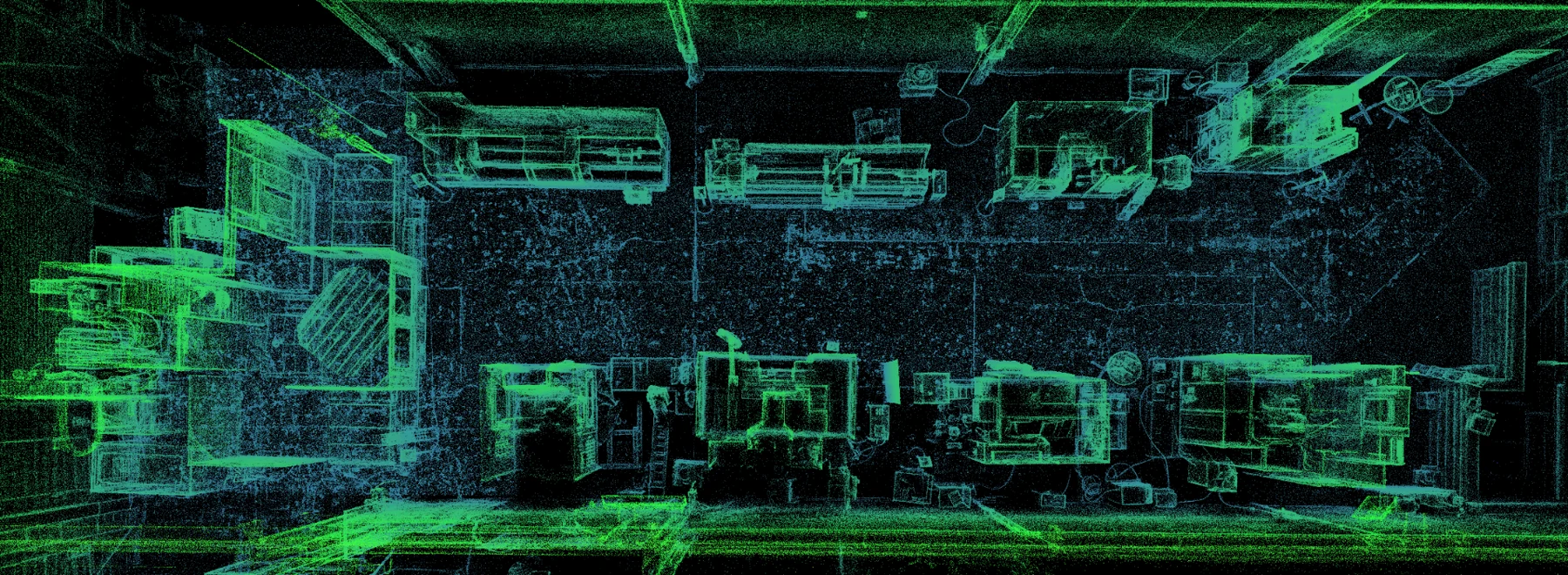 Planning-grade geometry
WHAT YOUR TEAM GAINS
Include controls, conveyors, transformers, coolant equipment, automation, guarding, doors, service zones and maintenance-removal paths—not only the machine casting.
Review doors, aisles, turns, overhead conditions, temporary obstructions and the proposed final orientation as one installation problem.
Support earlier conversations with the machine supplier, rigger, millwright, electrician, facilities team, operations and management.
Manufacturer drawings often show a useful installation envelope, but the purchased configuration may add a chip conveyor, bar feeder, pallet system, transformer, control cabinet or field-supplied equipment. The real destination also includes columns, existing machines, aisles, utilities, people and production constraints.
The facility twin lets the team compare these conditions before the delivery date. Its purpose is to expose weak assumptions and identify the few controlled measurements and specialist decisions that matter most.
The machine needs an installation position, but it also needs operating space, operator access, loading access, chip and coolant handling, electrical and air service, maintenance clearance, door travel and safe interaction with nearby work.
A good fit check treats those as separate envelopes. Final requirements come from current, configuration-specific machine-builder information and the qualified parties responsible for the installation.
The best time to capture is while alternate machines, locations or orientations can still be compared. That gives the team a better basis for supplier questions, rigging quotations, site work and shutdown planning.
Axial Spaces supports feasibility and coordination. It does not sell the machine, certify the foundation, design utilities, engineer the installation or take responsibility for the move.
HOW A PROJECT MOVES
Confirm the machine, configuration, proposed locations, timing, stakeholders and decision the project must support.
Walk a planned mobile SLAM LiDAR route through the destination, likely move path and surrounding production area.
Compare current machine information and suitable project geometry with the planning-grade facility record.
Review likely conflicts, missing information and critical verification tasks with the responsible project team.
STRAIGHT ANSWERS
Provide the current machine make and model, manufacturer layout or installation drawing, dimensions, service zones, utility information and a STEP model when available. The quality and revision of supplied information are confirmed before it is used.
No. It provides planning-grade context and can expose likely conflicts, but the exact machine configuration, critical route and destination dimensions, foundation, utilities, rigging method and machine-builder requirements need independent verification.
Before ordering is ideal when the location, machine configuration or move route could affect the decision. It is still useful after ordering if there is time to resolve assumptions before delivery and installation.
No. Axial Spaces provides manufacturing-led spatial capture and planning context. Qualified riggers, trades, engineers, machine builders and authorities remain responsible for their respective work.
START WITH ONE REAL FACILITY
Focused decision-capture projects start around CAD $1,500. Full-facility capture, facility twins, equipment-move planning, hosting, and specialized deliverables are quoted by scope.
Scope My Facility Project